
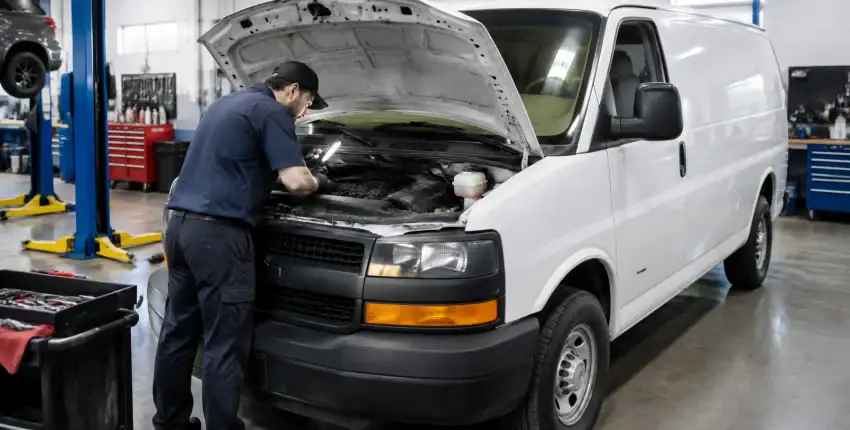
When a work van, truck, or company car is off the road, the cost is bigger than the repair bill. You may also lose working hours, delay jobs, or need to rearrange your schedule. Some breakdowns are unavoidable, but many start as small problems that go unnoticed or aren’t dealt with promptly.
A consistent maintenance routine is one of the most practical ways to reduce avoidable downtime. Here are ten common reasons a fleet can lose time, and steps you can take to address them.
1. Service intervals are easy to miss
When vehicles are busy, it’s tempting to postpone routine service until the next slow day. But overdue maintenance can allow everyday wear, fluid issues, or a developing mechanical problem to go unchecked.
How to fix it: Track each vehicle’s mileage and service dates, then schedule maintenance around the manufacturer’s recommendations. A shared calendar or fleet maintenance system can help you see what’s due before a vehicle falls behind. For covered motor carriers, federal rules also require systematic inspection, repair, and maintenance; check the FMCSA maintenance requirements that apply to your operation.
2. Every vehicle gets the same maintenance plan
A company car used for short trips doesn’t necessarily experience the same wear as a work truck that carries equipment all day. Stop-and-go driving, heavy loads, long idle periods, and frequent short journeys can all affect how a vehicle wears.
How to fix it: Keep records of how each vehicle is used, not just how far it travels. Use the manufacturer’s schedule as a starting point, and ask your repair shop whether your fleet’s driving patterns warrant closer attention to particular maintenance items.
3. Driver concerns don’t reach the person arranging repairs
Drivers often notice the first signs of a problem: a new noise, a change in handling, a warning light, or a vibration. If those observations stay informal, or get lost between shifts, a small issue may grow before anyone books service.
How to fix it: Give drivers a simple, consistent way to report concerns, and make one person responsible for reviewing them. Encourage specific descriptions: when the symptom occurs, whether it’s getting worse, and what warning lights appeared. For vehicles subject to federal motor-carrier rules, review the applicable inspection and defect-reporting requirements.
4. Tire problems are caught too late
Low pressure, uneven tread wear, or visible damage can affect handling and lead to an unplanned stop. A tire can also provide clues that another issue, such as alignment or suspension wear, deserves attention.
How to fix it: Include a visual tire check in your routine. Look for obvious damage and uneven wear, and check inflation according to the vehicle’s recommendations. If a tire keeps wearing unevenly or losing pressure, have the cause checked rather than treating each tire as an isolated problem.
5. Brake wear is left until it becomes urgent
Brake components wear with use, and vehicles that make frequent stops may need closer monitoring. Waiting for a severe noise or a noticeable change in braking can leave you with less time to plan the repair.
How to fix it: Have brakes checked at appropriate service intervals and whenever a driver reports a change in feel, sound, or warning indicators. Don’t ask a driver to keep using a vehicle when there’s a serious concern about whether it can stop safely; arrange an assessment.
6. Batteries and electrical faults cause surprise no-starts
A weak battery, corroded connection, or charging-system problem may not be obvious until a vehicle won’t start. That can disrupt a day’s schedule even when the underlying repair is relatively straightforward.
How to fix it: Add battery and charging-system checks to routine maintenance, especially when a vehicle shows slow starting or other electrical symptoms. Keep notes on recurring battery problems so a technician can look for a cause, not just replace a part.
7. Dashboard warnings get ignored
A warning light can be easy to dismiss when a vehicle still seems to drive normally. But the light is a signal that the vehicle’s systems have detected something worth checking; ignoring it makes it harder to know what’s happening.
How to fix it: Set a clear rule for reporting warning lights promptly. Record which light appeared and when, and arrange diagnostic service rather than guessing at the cause. Apex Automotive provides check-engine light diagnostics in Chester, PA.
8. The same fault keeps returning
If the repair history is scattered or a repeat concern is described as a brand-new problem each time, it can be harder to identify a pattern. A recurring issue may need a closer diagnosis, not another quick reset.
How to fix it: Keep service records with the vehicle’s mileage, reported symptoms, work completed, and follow-up notes. Share that history with the technician. It helps them understand what has already been checked and whether a repair solved the problem.
9. Maintenance is planned only after a vehicle is already down
When service is always reactive, repairs compete with the day’s work. Even routine maintenance can become disruptive if it’s arranged at the last minute.
How to fix it: Look ahead at upcoming due dates and coordinate maintenance with quieter periods where possible. A regular service window gives you more control over scheduling and helps reduce the chance that several vehicles need attention at once.
10. Nobody tracks downtime or closes the loop
A repair may get completed, but without follow-up, you may not know whether the problem is resolved or how often the fleet is losing time to similar issues. Maintenance is more useful when there’s a record of what happened and what comes next.
How to fix it: Track basic information: overdue services, reported defects, repeat repairs, and time a vehicle is unavailable. Review the pattern regularly. If the same type of issue keeps appearing, you can discuss whether changes to inspection timing or maintenance planning would help.

Build a maintenance routine that works for your business
Preventive maintenance can’t eliminate every breakdown, and it doesn’t mean repairing parts that don’t need attention. It does give you a chance to identify developing issues, plan service, and make decisions with clearer information. For fleet operators in Chester, a dependable local repair partner can also make it easier to keep vehicle records and service conversations in one place.
Apex Automotive works with individual owners and fleet vehicles. Our technicians service all makes and models, communicate findings clearly, and provide upfront pricing before work proceeds. Explore our auto repair and maintenance services or contact Apex Automotive about fleet maintenance in Chester, PA and surrounding areas. Call or text 610-876-6020, or visit us at 12 W 9th St, Chester, PA.