
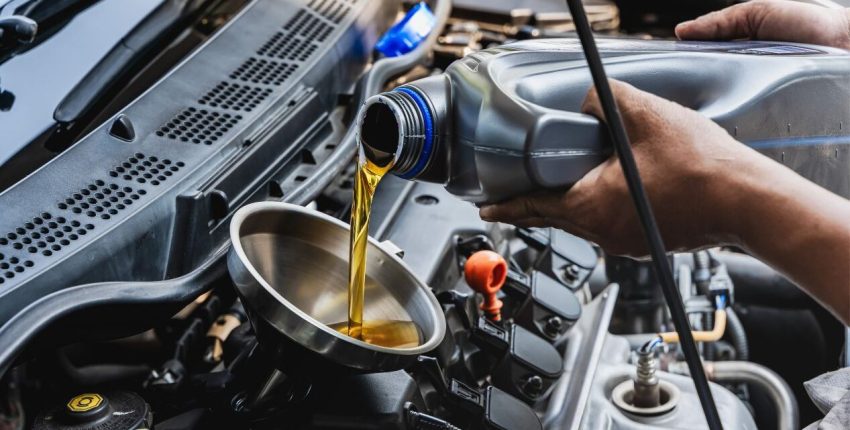
If you have searched for an oil change in Chester, PA, you have probably seen several different answers about when to schedule one. Some recommendations still say every 3,000 miles. Others suggest 5,000, 7,500, or even 10,000 miles.
The honest answer is that there is no single interval that fits every vehicle or every driver. Your owner’s manual, oil-life monitor, oil type, vehicle age, and daily driving habits all matter.
For most modern vehicles, the old 3,000-mile rule is no longer necessary. However, drivers who spend most of their time in stop-and-go traffic or make frequent short trips may need service sooner than someone who drives long highway distances.
Start With Your Owner’s Manual
Your vehicle manufacturer sets the most important oil-change recommendation for your specific engine. The manual usually lists:
- The required oil viscosity, such as 0W-20 or 5W-30
- Whether conventional, synthetic blend, or full synthetic oil is approved
- The recommended mileage and time interval
- A separate schedule for “normal” and “severe” driving
- Instructions for vehicles equipped with an oil-life monitoring system
Those details are more reliable than a general rule found online. Two vehicles from the same model year may have different requirements, especially if they use different engines.
If you are unsure which oil your vehicle needs or when it was last serviced, an inspection at Apex Automotive can help establish a clear maintenance plan.
The Real Debate: 3,000 vs. 5,000 vs. 7,500 Miles
Is every 3,000 miles still necessary?
For most newer vehicles, changing the oil every 3,000 miles is more frequent than the manufacturer requires. Modern engines, improved oil formulations, better filtration, and tighter manufacturing tolerances have made longer intervals possible.
That does not make 3,000 miles meaningless. It can still be a reasonable interval for:
- Older vehicles with higher mileage
- Engines that burn or leak oil
- Vehicles used almost entirely for short trips
- Frequent heavy towing or hauling
- Severe stop-and-go driving
- Drivers who use conventional oil where a shorter interval is recommended
The key is not to treat 3,000 miles as a universal rule. It may be appropriate for your vehicle, but it may also have you paying for service sooner than necessary.
Is 5,000 miles a safe middle ground?
For many drivers, 5,000 miles is a practical and conservative interval. It is especially reasonable when:
- You do a mixture of city and highway driving
- Your vehicle uses conventional oil
- You are not sure how severe your driving conditions are
- Your car does not have an oil-life monitor
- You prefer a simple maintenance routine
A 5,000-mile schedule is not automatically better for every engine, but it can provide peace of mind without relying on the outdated assumption that every vehicle needs service at 3,000 miles.
Can you wait 7,500 miles or longer?
Many modern vehicles using full synthetic oil are designed for 7,500-mile intervals or more. Some manufacturer schedules allow 10,000 miles or longer under normal conditions.
Longer intervals may be appropriate when:
- Your owner’s manual allows them
- You use the specified full synthetic oil
- Your engine is not losing oil
- Most of your driving involves longer trips
- Your oil-life monitor has not indicated that service is due
The important phrase is “when your manufacturer allows them.” You should not extend the interval simply because another vehicle can go 10,000 miles between services.
Guidance from organizations such as Consumer Reports, AAA, and Kelley Blue Book generally supports following the vehicle manufacturer’s schedule instead of relying on one mileage number for every car.
Synthetic vs. Conventional Oil: What Changes?
Conventional oil
Conventional motor oil can be the right choice for some older vehicles and engines designed around it. It generally costs less per service, but it may not provide the same resistance to heat, breakdown, and deposits as a full synthetic product.
A typical conventional-oil interval may be around 5,000 miles, but your vehicle’s manual should always take priority. If you drive mostly short distances or sit in heavy traffic, a shorter interval may be appropriate.
Full synthetic oil
Full synthetic oil is engineered to provide more consistent protection across temperature changes and demanding conditions. It is common in newer vehicles and may be required by the manufacturer.
Synthetic oil often supports intervals in the 7,500- to 10,000-mile range, but the correct interval depends on the engine and the manufacturer’s specifications. Synthetic does not make your vehicle immune to oil contamination, leaks, low oil level, or mechanical problems.
Synthetic blend oil
Synthetic blend oil combines conventional and synthetic base oils. Its recommended service interval falls between the two in some applications, but there is no universal blend interval. Always check the label and your owner’s manual rather than assuming it automatically lasts a certain number of miles.
At Apex Automotive, an oil and filter change includes draining the old oil, replacing the filter, refilling with oil that meets manufacturer specifications, checking fluid levels, inspecting for leaks, and completing a visual safety check.
How Chester Driving Habits Can Shorten the Interval
Mileage alone does not tell the whole story. The way you drive can be just as important.
Stop-and-go traffic
When you spend a lot of time idling, braking, accelerating, and moving at low speeds, the engine continues running even though the vehicle is not covering many miles. This creates more operating time and heat per mile than steady highway driving.
Urban commuting around Chester and nearby communities can include traffic lights, congestion, frequent stops, and short stretches between destinations. If that describes your routine, your vehicle may classify it as severe service.
Frequent short trips
Short trips can be especially hard on engine oil. If you drive only a few miles at a time, the engine may not reach full operating temperature for long enough to evaporate moisture and fuel that can accumulate in the oil.
A few short trips each week are not necessarily a problem. But if nearly every trip is a quick drive to work, school, shopping, or errands, ask whether your manufacturer lists short-trip driving as severe service.
Seasonal temperature changes
Chester-area drivers deal with hot summers, cold winters, and changing weather throughout the year. Temperature extremes can place additional demands on fluids and engine components. Your vehicle’s recommended oil grade is designed to account for these conditions, so using the correct specification matters.
Heavy loads and demanding use
Towing, hauling, extended idling, frequent high-speed driving, and dusty conditions may also require a shorter maintenance schedule. Check the severe-service section of your manual if any of these apply.
Why Your Oil-Life Monitor Matters
Many modern vehicles use an oil-life monitoring system instead of relying only on a fixed mileage countdown. This system estimates oil service needs using factors such as:
- Engine temperature
- Trip length
- Driving time
- Engine speed
- Load and operating conditions
- How often the vehicle is started and stopped
It is not simply measuring the oil in the engine like a laboratory test. Instead, it uses vehicle data and a programmed calculation to estimate when service is due.
For that reason, you should generally follow the oil-life monitor when it is working correctly and when you are using the oil specified by the manufacturer. Do not ignore the warning because the vehicle has driven fewer miles than an old 3,000-mile rule.
At the same time, do not wait indefinitely just because the monitor has not reached zero. Follow any time-based requirement in your owner’s manual. If the vehicle is driven very little, an annual oil change may be a sensible baseline when no other instruction is provided.
What to Check Between Oil Changes
Regular oil changes are important, but checking the oil level between services is just as important. Some engines consume oil gradually, and a low level can reduce lubrication even when the oil itself is not due for replacement.
Check your oil level according to the instructions in your owner’s manual, usually on level ground with the engine off for the recommended amount of time. Contact a repair shop if you notice:
- The oil level dropping repeatedly
- Fresh oil spots under the vehicle
- Blue exhaust smoke
- A burning-oil smell
- Engine ticking or knocking
- An oil-pressure warning light
An oil change cannot correct every engine problem. If warning signs are present, a proper inspection is the honest next step.
The Bottom Line for Chester, PA Drivers
For most vehicles, the best answer is not automatically 3,000, 5,000, or 7,500 miles. Start with your owner’s manual or oil-life monitor, then consider how your vehicle is actually used.
As a general guide:
- 3,000 miles: May suit older vehicles or severe driving conditions
- 5,000 miles: A practical interval for many conventional-oil vehicles and mixed driving schedules
- 7,500 miles or more: Often appropriate for newer vehicles using full synthetic oil when the manufacturer permits it
When you need an oil change in Chester, PA, Apex Automotive can help you choose the right oil and interval for your vehicle instead of selling you service you do not need. Our technicians work on all makes and models and provide clear communication, quality parts, and upfront recommendations.
Schedule your oil and filter change or contact Apex Automotive today. A straightforward maintenance visit can help protect your engine and give you greater confidence every time you get behind the wheel.